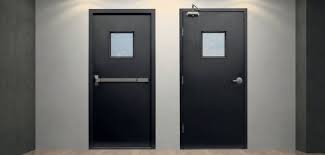
Introduction
Commercial buildings need doors that can withstand difficult use, provide reliable security, and meet miscellaneous security standards. Among the common people options available, commercial hollow metal doors are one of the most standard selections for businesses, schools, health care facilities, warehouses, and government constructions.
Known for their endurance, flexibility, and cost-effectiveness, hollow metal doors offer unending efficiency in urgent surroundings. This guide explores everything property owners, ease managers, and contractors need to find out about commercial hollow metal doors.
Commercial Hollow Metal Doors
Commercial metal doors are built using metal sheets that form the outer shell, while the interior is suffused with pieces such as:
1. Honeycomb cardboard cores
2. Polystyrene insulation
3. Polyurethane foam
4. Steel stiffeners
5. Mineral cores for fire opposition
These center materials specify substance, insulation, sound control, and fire security while maintaining a manageable weight. Hollow metal doors are normally paired with steel frames, forming a sturdy and secure door system suitable for marketing applications.
Why Hollow Metal Doors Are Well-known in Commercial Buildings
Commercial hollow metal doors have improved the industry standard because they offer various benefits over wood, fiberglass, and other door materials.
1. Exceptional Durability
One of the main benefits of hollow metal doors is their ability to withstand heavy common use.
They are ideal for:
- Schools
- Hospitals
- Manufacturing facilities
- Office houses
- Retail stores
- Warehouses
Unlike wood doors, steel doors fight warping, cracking, splitting, and impact damage.
2. Enhanced Security
Security is a top priority for commercial properties. Hollow metal doors provide wonderful protection against forced entry and vandalism.
Their steel construction helps:
- Deter break-ins
- Protect occupants
- Secure valuable property
- Support access control plans
Many businesses select hollow metal doors for exterior entrances, utility rooms, and restricted-approach regions.
Types of Hollow Metal Door Cores
The core plays a main role in deciding the performance of hollow metal doors.
1. Honeycomb Core
Honeycomb cores are lightweight and inexpensive. They supply adequate substance for many standard marketing applications.
Best suited for:
- Office interiors
- Storage rooms
- General-purpose spaces
2. Polystyrene Core
Polystyrene-filled doors offer upgraded warm insulation and substance efficiency.
Ideal for:
- Climate-controlled constructions
- Exterior entrances
- Energy-awake abilities
3. Polyurethane Core
Polyurethane cores specify superior insulation and fundamental substance.
Benefits involve:
- Better energy effectiveness
- Increased rigidity
- Enhanced endurance
4. Mineral Core
Mineral cores are usually used in fire-rated doors.
These doors help hold fire and smoke while meeting building code requirements.
Fire-Rated Hollow Metal Doors
Many marketing constructions demand fire-rated openings to comply with local construction and fire codes.
Fire-rated hollow metal doors are designed to:
1. Slow the spread of fire
2. Protect removal routes
3. Reduce property damage
4. Improve tenant security
The necessary rating depends on the building’s design and ownership type.
Benefits of Professional Installation
Even the excellent hollow metal door can underperform if equipped inaccurately.
Expert metal door installation helps ensure:
1. Proper adjustment
2. Secure anchoring
3. Smooth movement
4. Code agreement
5. Maximum lifetime
A correctly equipped door scheme transfers better security, persistence, and long-term profit.
Conclusion
Commercial hollow metal doors remain one of the most reliable and economical answers for new commercial facilities. Contact your nearby expert company for professional installation.